
|
|
||||||||||||||||||


| 2026-2027 Electoral Calendar, latest official version |

|
 |
|
|
|
|
|
|
|||||
|
|
Haiti - Agriculture : The Steering Committee approves the implementation of the Inclusive Blue Economy Project (2026-2027) 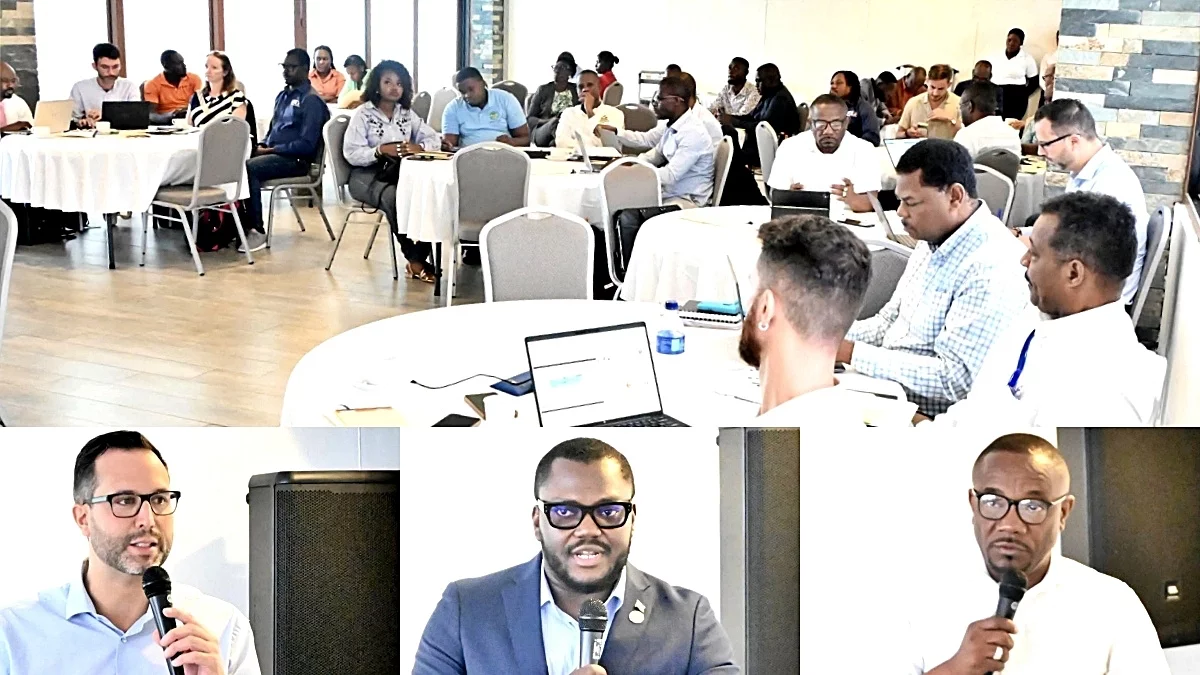
The Steering Committee (COPIL) of the Inclusive Blue Economy (I-BE) project approved, earlier this week in Cap-Haitien, the resolution outlining the project's implementation for the 2026-2027 fiscal year. Implemented under the coordination of the Ministry of the Environment, through the National Observatory for Environmental Quality and Vulnerability (ONQEV), in collaboration with the Ministries of Economy and Finance and Agriculture, the project is supported by the International Fund for Agricultural Development (IFAD). The I-BE project aims to promote the sustainable management of marine and coastal resources, while improving the living conditions of the populations that depend on them. This second meeting of the Steering Committee was chaired by Valéry Fils-Aimé, the Minister of the Environment, who also serves as Chair of the COPIL. The meeting was held in the presence of Marcelin Aubourg, Minister of Agriculture, Natural Resources and Rural Development (MARNDR), as well as officials from the Ministry of the Environment, MARNDR, and the National Agency for Protected Areas (ANAP). Representatives from municipal commissions and civil society organizations in the North and Northeast, along with IFAD experts, also participated. In his opening remarks, the Minister of the Environment noted that Haiti possesses a rich marine and coastal heritage, currently exposed to the adverse effects of climate change and unsustainable exploitation practices that require rigorous oversight. "The Government's position must be clear within the framework of this project," he stated, urging stakeholders to make the country's natural resources a true driver of sustainable development, without compromising their integrity or their capacity for renewal. Minister Marcelin Aubourg emphasized the need to reconcile the protection of fragile natural resources with improving the living conditions of the populations that depend on them. He commended the stakeholders for the relevance of the I-BE project, whose interventions contribute to the priorities of the government's roadmap for food security and the fight against hunger. According to the Minister, the project should contribute to diversifying livelihoods, strengthening household incomes, improving nutrition, and developing economic activities compatible with the sustainable management of natural resources. During an evaluation visit to the I-BE project in Haiti, Samir Bejaoui, the IFAD Country Director, praised the results observed in the intervention areas. He stated that the improvements seen in the living conditions of beneficiaries stem in particular from the entrepreneurship initiatives and the technical support provided by the various institutions involved. He also commended the leadership of the Ministry of the Environment and the commitment of the institutions responsible for implementing the project, whose interventions enable beneficiaries to improve their incomes and strengthen their capacity to cope with economic, climate, and social shocks. The I-BE project aims to support 24,000 households in several sectors and areas of activity related to the protection and sustainable development of natural resources. Interventions include artisanal fishing, rice farming, beekeeping, cattle breeding, and access to microfinance. The project operates primarily in the municipalities of Caracol, Limonade, Terrier-Rouge, Fort-Liberté, and Ferrier, in the North and Northeast departments. This support aims to strengthen the resilience of communities, particularly those in coastal areas, diversify their sources of income, and promote the development of sustainable economic activities, in line with national objectives for the blue economy, food security, and poverty reduction. HL/ HaitiLibre
|
|




|
|
Why HaitiLibre ? |
Contact us |
Français
Copyright © 2010 - 2026 Haitilibre.com |