
|
|
||||||||||||||||||


| 2026-2027 Electoral Calendar, latest official version |

|
 |
|
|
|
|
|
|
|||||
|
|
Haitians under TPS, without work permits as of July 10, 2026 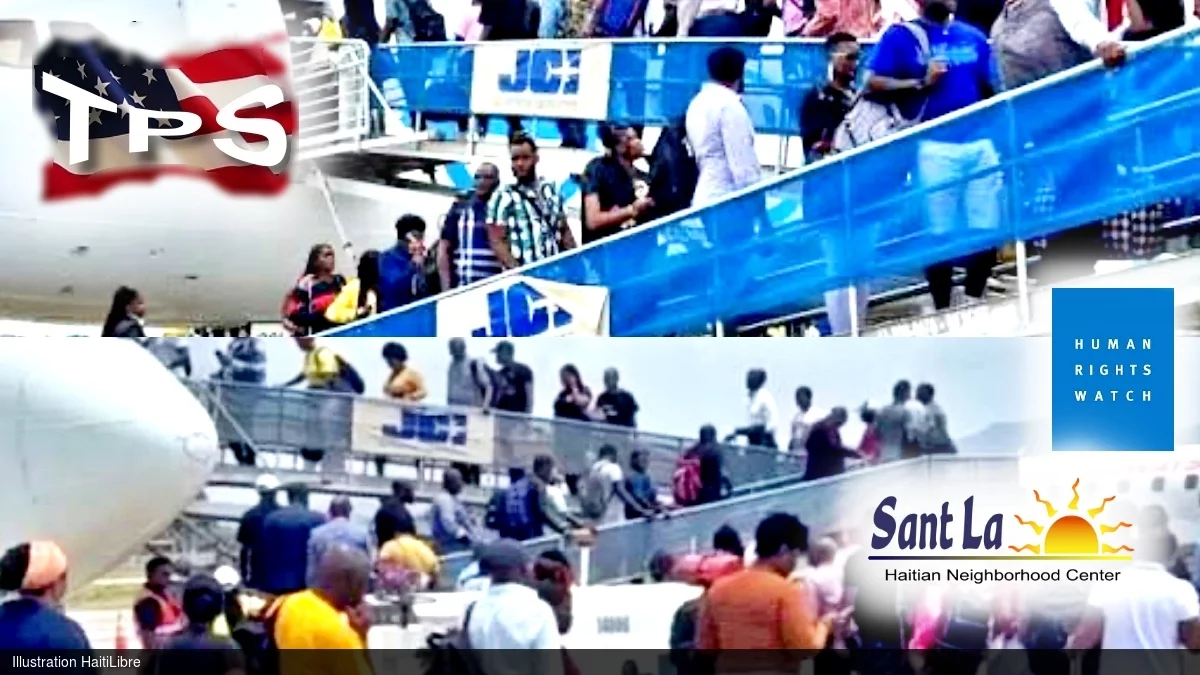
The Trump administration's decision, issued on June 25, 2026, by the U.S. Supreme Court, to terminate Temporary Protected Status (TPS) for Haitians (https://www.haitilibre.com/en/news-47849-haiti-flash-very-bad-news-the-supreme-court-authorizes-the-trump-administration-to-revoke-tps.html), has sparked deep concern among Haitian communities in Florida, who fear family separations, job losses, and deportations to a country plagued by violence and a humanitarian crisis, Human Rights Watch and Sant La Haitian Neighborhood Center said today. "Without TPS protections, Haitians risk being sent back to one of the world's most devastating human rights crises," said Juanita Goebertus, Americas Director at Human Rights Watch. "Congress should act swiftly to preserve TPS protections for Haitians and prevent that from happening." In partnership with Sant La, Human Rights Watch conducted interviews with 40 Haitian TPS beneficiaries in Miami, Florida, and with 15 representatives from community organizations. Researchers also reviewed information from the U.S. government and other Haitian and international organizations. The Haitian TPS beneficiaries said that if they were returned to Haiti, they would be targeted by criminal groups. "Losing TPS would be like a death sentence," said one 28-year-old Haitian man. "If they deport me to Haiti, people will think I have money because I lived abroad. They will try to extort or kidnap me. And because I have no money or savings to pay, they will kill me." Approximately 330,000 Haitians were eligible for Temporary Protected Status (TPS) in the United States before the Trump administration decided to end the program, including about 158,000 in Florida, home to the largest Haitian immigrant population in the country. Many work in healthcare, elder care, construction, tourism, and hospitality. According to FWD.us, a bipartisan political rights organization focused on immigration, Temporary Protected Status (TPS) recipients in Florida contributed approximately $2.6 billion annually to the state's economy, with about $1.5 billion of that coming from the Miami metropolitan area alone. Human Rights Watch found that Haitian families in Florida were already experiencing severe economic and social consequences even before the Supreme Court ruling. In the preceding months, TPS recipients reported that expired work permits, renewal delays, and employer confusion about their legal status had cost some people their jobs, reduced incomes for others, and left families unable to pay rent, buy food, access healthcare, and support relatives in Haiti. Some parents had stopped sending their children to school or were avoiding medical appointments for fear of contact with authorities. The Senate should promptly pass the bill approved by the House of Representatives, which would preserve Temporary Protected Status (TPS) protection for Haitians until April 2029, Human Rights Watch and Sant La said. As part of broader immigration reform, Congress should also consider providing pathways to legal permanent residence or other forms of lasting protection for migrants with longstanding ties to the United States, including the many Haitian TPS beneficiaries. Not only have conditions in Haiti not improved, but they have deteriorated significantly since TPS was first designated in 2010. Deporting Haitians back to their country would send them back to one of the world’s most serious humanitarian and human rights crises. Since 2022, the Office of the United Nations High Commissioner for Refugees (UNHCR) and the Office of the United Nations High Commissioner for Human Rights (OHCHR) have repeatedly called on states not to forcibly return Haitians, citing life-threatening safety and health risks, widespread abuses, and the lack of conditions for safe, dignified, and sustainable returns. "The consequences of the Trump administration's actions will be felt not only by Haitian TPS holders, but also by the workplaces, schools, and communities that depend on them," said Thamara Labrousse. "Haitian TPS holders have built their lives in this country and are an integral part of the social and economic fabric of communities across Florida and the nation." Breaking News : According to a directive from the Department of Homeland Security (DHS), in order to ensure an administrative transition while lower courts implement the recent decision of the United States Supreme Court authorizing the termination of Temporary Protected Status (TPS) https://www.haitilibre.com/en/news-47849-haiti-flash-very-bad-news-the-supreme-court-authorizes-the-trump-administration-to-revoke-tps.html , the E-Verify system, which verifies work permits, announces the extension until July 10, 2026, of the work permits of Haitians benefiting from Temporary Protected Status (TPS) in the United States. SL/ HaitiLibre
|
|




|
|
Why HaitiLibre ? |
Contact us |
Français
Copyright © 2010 - 2026 Haitilibre.com |